
Browse Items (53 total)
Sort by:
Equestrian Domitian
Description:
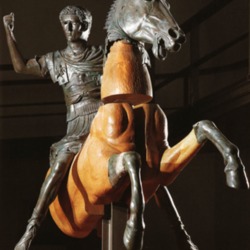
The statue of “Equestrian Domitian” is a dynamic representation of a man riding a horse. The horse’s front legs are bent and lifted off the ground, with its left hoof raised slightly higher than its right. The main portion of the…
The statue of “Equestrian Domitian” is a dynamic representation of a man riding a horse. The horse’s front legs are bent and lifted off the ground, with its left hoof raised slightly higher than its right. The main portion of the…
Delos Pseudo-Athlete
Description:
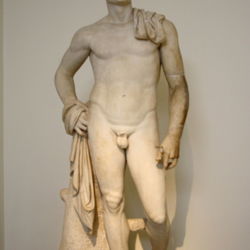
The Delos Pseudo-Athlete is a male nude figure, and stands at over life size, at 2.25 meters. His hairline is receding, showing little evidence of hair carved into the marble, almost appearing bald. The forehead protrudes significantly…
The Delos Pseudo-Athlete is a male nude figure, and stands at over life size, at 2.25 meters. His hairline is receding, showing little evidence of hair carved into the marble, almost appearing bald. The forehead protrudes significantly…
Copenhagen Vespasian
Description:
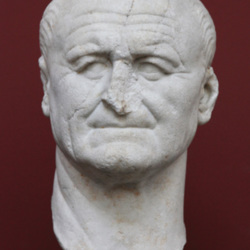
This marble portrait is a veristic bust of the Roman emperor Vespasian. He is depicted in a very mature way, appearing to be about 60 years old. His nose has been broken off, his hair is very thin, and the top of his head is balding.…
This marble portrait is a veristic bust of the Roman emperor Vespasian. He is depicted in a very mature way, appearing to be about 60 years old. His nose has been broken off, his hair is very thin, and the top of his head is balding.…
Commodus as Hercules
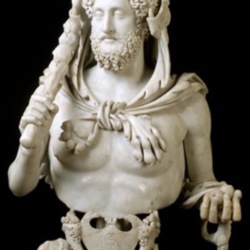
Description: Commodus, rendered in the guise of Hercules in a marble bust, is depicted as a young, muscular man, who is mostly nude. He dawns the skin of a lion as his headdress, with the deflated beast’s front paws secured in a tight knot across his…
Coin of Ptolemy I
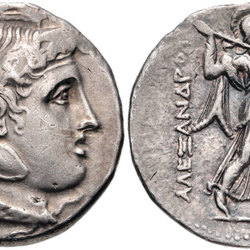
Description:
The Tetradrachm of Ptolemy I Soter, like all coins, has two sides, the obverse and reverse. The obverse depicts the portrait of Alexander the Great. He is shown wearing an elephant headdress, the mitra of Dionysus, the ram’s horn, and…
The Tetradrachm of Ptolemy I Soter, like all coins, has two sides, the obverse and reverse. The obverse depicts the portrait of Alexander the Great. He is shown wearing an elephant headdress, the mitra of Dionysus, the ram’s horn, and…
Bust of Themistokles
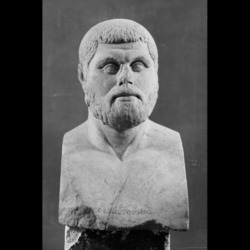
Description:
The ‘Bust of Themistokles’ depicts the head of a man and part of his upper chest, which is more specifically known as a herm, on the bottom of which rests a small Greek inscription of his name, ‘Themistokles’. In terms of facial…
The ‘Bust of Themistokles’ depicts the head of a man and part of his upper chest, which is more specifically known as a herm, on the bottom of which rests a small Greek inscription of his name, ‘Themistokles’. In terms of facial…
Bust of Pericles
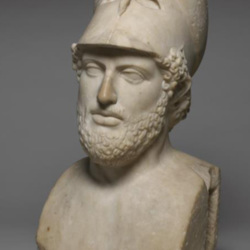
Description:
The Roman marble portrait bust, “Bust of Pericles,” depicts the upper chest, neck, and head of a male figure. The figure’s head is slightly tilted to the left, suggesting that the original Greek bronze portrait, the basis for the copy,…
Bust of Nefertiti
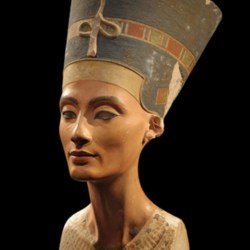
Description: The Bust of Nefertiti, a highly significant bust from the New Kingdom (18th Dynasty, Amarna Period) showcases Queen Nefertiti holding her head in an upright position. Her eyes are half open, rendering a sense of serenity, and her mouth…
Bust of Ankh-haf
Description:
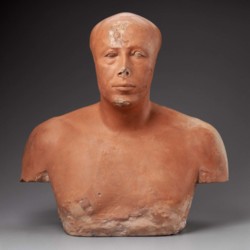
In ancient Egypt, artists often gravitated towards abstract qualities in their portraiture, resulting in characteristics that some would not define as a “true portrait.” This decree is shattered in the Bust of Prince Ankh-haf, as it…
In ancient Egypt, artists often gravitated towards abstract qualities in their portraiture, resulting in characteristics that some would not define as a “true portrait.” This decree is shattered in the Bust of Prince Ankh-haf, as it…
Artemidorus
Description
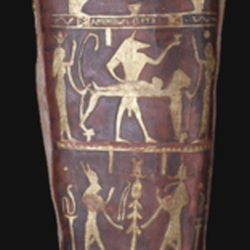
The Artemidorus is a mummy wrapped fully, plastered, and painted. Along with the paint there is also use of gold leaf for designs throughout. The portrait depicts Artemidorus wearing a white mantle and tunic. He is a thin man with a…
The Artemidorus is a mummy wrapped fully, plastered, and painted. Along with the paint there is also use of gold leaf for designs throughout. The portrait depicts Artemidorus wearing a white mantle and tunic. He is a thin man with a…